
Tunisia Appoint Herve Renard as Manager After Lamouchi Sacked Following 5-1 Humiliation
Authored by cn-ayxsports.net, 17 Jun 2026
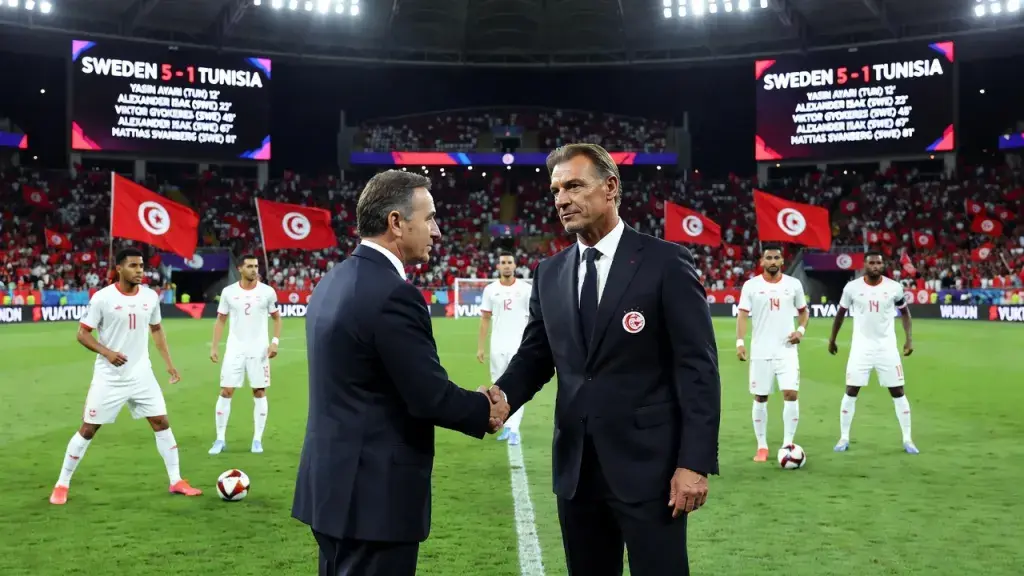
Tunisia have moved swiftly to overhaul their World Cup campaign, appointing experienced French coach Herve Renard as head manager just 24 hours after sacking Sabri Lamouchi in the wake of a brutal 5-1 opening-game defeat to Sweden. Lamouchi becomes the first coach in World Cup history to be dismissed after a single match at the tournament - a drastic and historic step that underlines the scale of the crisis that engulfed the Tunisian camp on matchday one. Renard, 57, was confirmed on Tuesday and will have just days to prepare his new side for Sunday's must-improve fixture against Japan.
The speed of the decision reflects deeper problems within Tunisia's setup than the scoreline alone. Reports had emerged of a fractured relationship between Lamouchi and the Tunisian Football Federation, as well as tensions inside the dressing room - circumstances that made the federation's decision to act immediately feel less like a panic measure and more like a conclusion that had been building for some time. The former Cardiff City manager, who had been unable to stabilise the environment around the squad, paid the price before most coaches have even taken a second training session at a World Cup. Fans accustomed to following sports events in real time - whether football, tennis, or even cybersport live betting - will rarely have seen a managerial situation escalate and resolve this quickly at the biggest stage in football.
Sweden's performance in that opening game was emphatic. Yasin Ayari and Alexander Isak gave Graham Potter's side a commanding two-goal lead before the break, with Omar Rekik's header offering Tunisia a brief moment of hope. But the second half belonged entirely to Sweden. Viktor Gyokeres and Mattias Svanberg extended the lead, and Ayari's stoppage-time fifth completed a statement victory that left Tunisia's goal difference in tatters. With the tournament expanded to accommodate more nations and 32 knockout spots available, Tunisia's campaign is wounded but not necessarily finished - though the margin for further error is now extremely slim.
The Man Tunisia Have Turned To
Renard arrives with credentials that few coaches operating in African football can match. His most celebrated work on the continent came with Zambia and Ivory Coast, both of whom he led to Africa Cup of Nations titles - a feat that remains extraordinarily rare for any single manager and places him among the most decorated figures in African football history. He also guided Angola and has a thorough understanding of the specific dynamics, pressures, and personalities that define the African international game.
At club level, he has managed Lille and FC Sochaux in France, but it is his international work that has defined his career in its second half. He took Morocco to the 2018 World Cup in Russia, and his appointment now means he will have managed three different nations at men's World Cups - a distinction that speaks to both his longevity and the demand for his services across football's global landscape.
A World Cup Career That Refuses to End
Renard's route back to a World Cup dugout has been an eventful one. He was Saudi Arabia's head coach for over three years during his first stint, a period that included one of the tournament's most memorable moments when the Green Falcons defeated eventual champions Argentina 2-1 at Qatar 2022. Saudi Arabia did not reach the knockout stages, but that result alone embedded Renard's name in World Cup folklore. His first Saudi spell ended in March 2023, when he took charge of France's women's national team. He led Les Bleues to the 2023 Women's World Cup, where they were eliminated in the quarter-finals on penalties by hosts Australia.
He returned to Saudi Arabia for a second stint, helping them secure qualification for this tournament before being sacked in April - less than two months before the World Cup began. Former Greece international Georgios Donis replaced him. The Saudi federation's timing left Renard without a role at a tournament he had arguably helped shape. Tunisia's crisis has given him the opportunity to return to the men's World Cup stage almost immediately, albeit under emergency conditions and with an enormous amount of work to do.
What Tunisia Need Now
Tunisia's remaining fixtures will define whether this dramatic reshuffle represents genuine crisis management or a federation in freefall. A five-goal defeat obliterates goal difference and puts enormous pressure on the results themselves - wins, not just improvements in performance, are what Tunisia will need to navigate out of their group. Renard has shown throughout his career that he can galvanise squads quickly, impose structure, and generate belief in difficult environments. Those qualities will be tested immediately.
Whether enough of the squad buys into a new voice, new instructions, and a new tactical approach in the space of a few days remains the central question. Renard has done it before in African football. Tunisia's federation is banking on him being able to do it again, at the worst possible moment, on the biggest possible stage.