
Chicago Rejoins FIFA's Orbit, Eyes 2031 Women's World Cup
Authored by cn-ayxsports.net, 22 Oct 2026
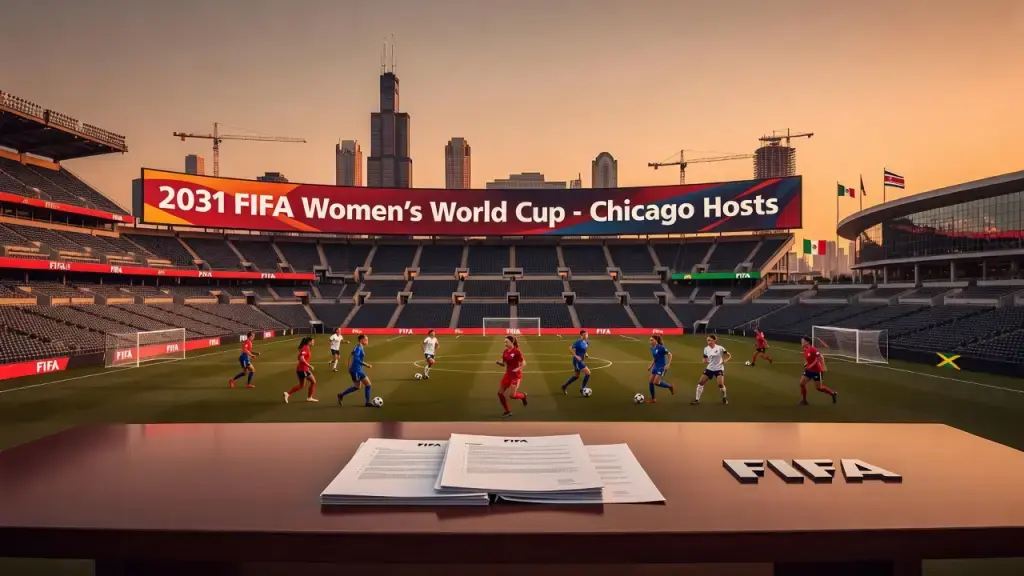
Seven years after walking away from the 2026 men's World Cup over financial terms it deemed unacceptable, Chicago has quietly re-entered FIFA's good graces. The city has submitted paperwork to U.S. Soccer seeking to host matches at the 2031 Women's World Cup, joining Portland as a late addition to a bid process that had already locked in 27 cities across the United States.
A Reversal Rooted in Opportunity
Kara Bachman, executive director of the Chicago Sports Commission, confirmed the move in a statement to The Athletic, framing it as a chance the city could not ignore. She pointed to the presence of established women's sports advocates in Chicago, including Chicago Stars owner Laura Ricketts, while stressing that any involvement would hinge on terms that are "fair and good value" for residents. That caveat matters: Chicago's past dealings with FIFA left scars that shaped the current approach.
The city has two venues in play. Soldier Field, the 61,500-capacity home of the NFL's Chicago Bears, offers the scale FIFA has favored for marquee fixtures. McDonald's Park, the 22,000-seat soccer-specific stadium set to open for MLS side Chicago Fire in 2028, offers an alternative model. FIFA has not yet settled whether the 2031 tournament will lean on NFL-scale venues exclusively or mix in smaller, soccer-purpose-built stadiums - a decision that could shape which cities ultimately make the final cut.
Why Chicago Walked Away in 2018
The backdrop here is significant. Former Chicago mayor Rahm Emanuel pulled the city out of 2026 host city contention in 2018, citing FIFA's refusal to cede any flexibility over contractual obligations. Emanuel told The Athletic in June that he would not expose Chicago taxpayers as "the dumb money at the table," revealing that FIFA's terms would have allowed the organization to order construction of a dome over the open-air Soldier Field at the city's expense, with no local say in the matter.
That history makes Chicago's re-entry notable rather than contradictory. Sources familiar with the city's thinking, speaking anonymously to protect ongoing relationships, say Chicago views major events - including the 2031 Women's World Cup and the men's and women's Rugby World Cups scheduled for the U.S. in 2031 and 2033 - as opportunities worth pursuing, provided the financial exposure is contained.
A Wider Standoff Over Hosting Terms
Chicago's calculus reflects a broader mood among American host cities. Many that staged 2026 men's World Cup matches are still navigating disputes with FIFA over transport costs, fan festival obligations and so-called "clean stadium" requirements - rules that forced some cities to spend close to $500,000 stripping sponsor branding from venues. The Athletic reported in June that 21 potential host cities drafted a joint letter warning they would not sign on for 2031 without concessions, though it was ultimately withheld over concerns about public perception.
New York and New Jersey have again applied jointly despite friction between FIFA and the state under new governor Mikie Sherrill, while Washington D.C. - absent from the 2026 host list - has entered the race, banking on its new Commanders stadium opening in 2030. FIFA's council met in Zurich this week to review commitments on training sites, hotels and airport logistics, a step toward provisional approval expected in November, with a formal host announcement penciled in for Nov. 23.
Stakes Beyond the Pitch
The 2031 tournament, led by the United States alongside Mexico, Jamaica and Costa Rica, will expand to 48 teams for the first time and is projected in FIFA's bid book to generate roughly $4 billion in revenue - nearly eight times the figure from the 2023 edition in Australia and New Zealand. With Chicago and Portland now added to the 27 cities already named, competition for host status is intensifying, giving FIFA leverage just as cities push back harder than they did ahead of 2026.